The phone rings. It’s an unknown number, but it looks local. You hesitate, then answer. A brief silence, then a robotic voice: “This is an urgent message about your bank account. We have detected suspicious activity. Please press ‘one’ to verify your information.” You hang up, frustrated. Another scam.
This scenario plays out millions of times a day across the world. Blocking numbers doesn’t always help, reporting them may feel futile, and fraudsters always seem to be one step ahead. How do spam calls work? And is there any real way to stop them?
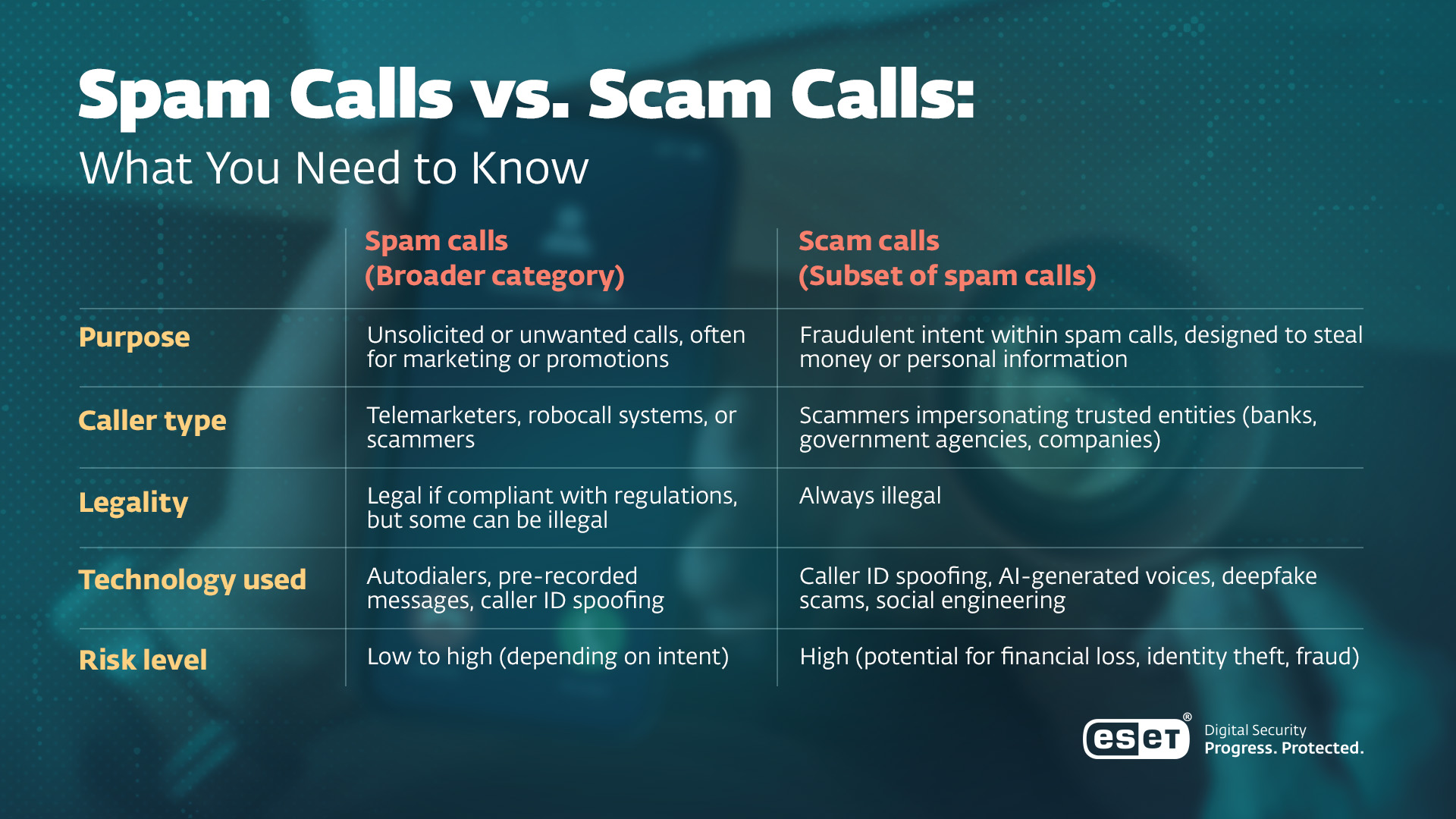
Spam calls are not a new phenomenon, but their numbers have been rising throughout the years, flooding phone networks at an unprecedented scale. At their core, they fall into three distinct categories. Some are robocalls, automated messages that may be used for legitimate purposes – reminders from your doctor’s office or public service announcements – but they can also be gateways to scams. Others are telemarketing calls, where an actual human is on the line, often aggressively pushing services or products. But the most dangerous category is scam calls – designed specifically to deceive, manipulate, and defraud.
How scam calls work: The technology that fuels chaos
Most people imagine scam/spam calls coming from a scammer sitting at a desk, dialing one number after another. But that couldn’t be further from the truth. This industry is highly automated, incredibly efficient, and almost impossible to track. At its heart is a technology called autodialing, a system that can make millions of calls per day.
Here’s how it works: First, an autodialer software rapidly cycles through massive lists of phone numbers, either randomly generated, bought from a third-party data provider that probably scraped it from public sources, or obtained from data leaks and breaches. The system doesn’t wait for someone to answer – if the call goes to voicemail, it moves on. If a person picks up, the next phase kicks in. Depending on the scam, a pre-recorded message might play, or the call may be transferred to a live operator trained to manipulate and extract information.
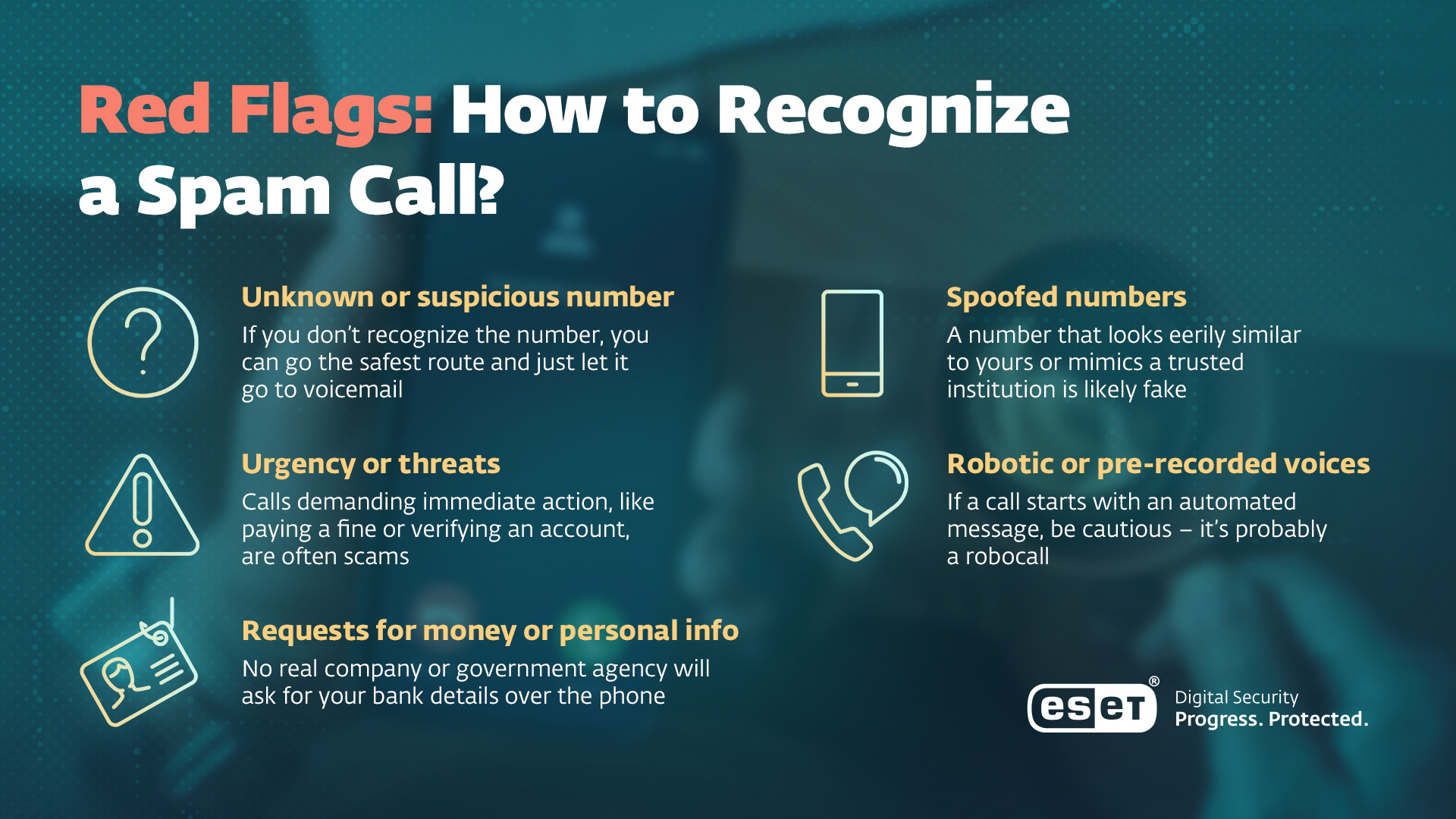
What makes these calls even harder to stop is caller ID spoofing. The number flashing on your screen isn’t real. Scammers can make their calls appear as if they’re coming from local numbers, government agencies, or even businesses you trust. That’s why blocking one number isn’t very effective – scammers can easily get a new one.
The most dangerous scam calls don’t rely on technology alone. They rely on psychological manipulation. Unlike the annoying, but relatively harmless, sales pitch, scam calls are weapons of psychological warfare. Their goal is to create panic and urgency, pushing victims to act before they have time to think, with lines such as: “Your Social Security number has been suspended due to suspicious activity,” or “We have a warrant for your arrest,” or “Your grandson has been in a car accident and needs immediate financial help.” The more frightening the claim, the more likely it will be that the target will comply.
So, while scam calls may seem like a minor annoyance for those who recognize the threat, the reality is far more disturbing. These calls are not harmless – they are a key tool in a growing wave of financial fraud, identity theft, and corporate phishing attacks.
The cost of picking up: When scam calls become a real threat
The first mistake people make is assuming they’re too smart to fall for a scam. The reality is, spam calls don’t just trick the gullible – they exploit human instincts. Every year, billions of dollars are stolen through phone scams. One of the most devastating consequences of falling for a scam call is identity theft. Fraudsters often impersonate banks, government agencies, or even their victims’ own employers, coaxing them into revealing their:
- Social Security numbers
- Bank account details
- Passwords and security codes
- Credit card information
Individuals aren’t the only ones suffering. Businesses are increasingly in the crosshairs of scam/spam calls, and the consequences can be highly damaging. Considering that an average spam call steals 3 minutes and 42 seconds, in large corporations, where thousands of employees use company phones, spam calls can create massive productivity loss. Call center agents, customer service reps, and even executives waste time answering fraudulent calls, filtering through distractions, and blocking numbers that will only be replaced by new ones.
Beyond simple disruption, businesses face an even more dangerous threat: corporate phishing attacks. Fraudsters impersonate executives, tricking employees into revealing confidential company information, financial details, or access credentials. Some scammers even use AI-generated deepfake voices to make their impersonations more convincing. Even well-trained employees have fallen victim.
Finally, besides the financial damage to individuals and businesses, there’s another cost – mental and emotional stress. Elderly individuals often find themselves harassed relentlessly, with some losing their life savings to manipulative fraudsters. Others simply feel the weight of constant interruptions, or an erosion of trust in the very technology meant to keep them connected.
Can spam calls be stopped? The battle between regulators and fraudsters
Governments, law enforcement authorities, and telecom regulators across the world have been trying to combat the relentless rise of spam calls, but enforcement remains a major challenge. Scammers are often difficult to track down, so enforcing penalties on them often ends up being merely a dream. While laws and regulations exist in many regions, they often struggle to keep up with evolving scam tactics and technological loopholes.
So, how are different countries trying to stop spam calls? Some of the most aggressive anti-spam measures have been taken in North America, Europe, and parts of Asia, but no country has completely solved the problem.
- United States – The Federal Communications Commission (FCC) and Federal Trade Commission (FTC) oversee rules against illegal robocalls, requiring businesses to obtain explicit consent before making automated marketing calls. They’ve introduced the STIR/SHAKEN framework, a caller ID verification system that makes it harder for scammers to spoof phone numbers.
- European Union – Under the GDPR (General Data Protection Regulation), companies must obtain clear consent before making marketing calls. Some EU countries, like Germany and France, have additional national laws limiting telemarketing and requiring caller ID authentication.
- India – The Telecom Regulatory Authority of India (TRAI) has implemented strict rules on telemarketing calls, requiring businesses to register with the government and use designated numbers for promotional calls.
- Australia – The Australian Communications and Media Authority (ACMA) actively investigates spam call complaints and has fined businesses for violating its strict anti-telemarketing laws.
- Canada – The Canadian Radio-television and Telecommunications Commission (CRTC) enforces strict rules on unsolicited calls, requiring explicit opt-in consent for marketing communications.
Despite these efforts, scammers constantly adapt, shifting to new caller ID spoofing techniques, using international call routing, and finding legal loopholes.
Do not call lists: What they are and why they don't always work
One of the most widely used anti-spam measures across many countries is the Do Not Call (DNC) registry – a system where individuals can opt out of receiving telemarketing calls. In theory, if you add your number to the list, legitimate businesses are supposed to stop calling you.
But, while these registries are useful against legal telemarketing, they have serious limitations when it comes to scammers and fraudsters. The biggest problem with Do Not Call lists is that scammers, who operate outside the law, have no reason to respect these registries. The real fight against scam calls requires a combination of stronger laws, better telecom security, and consumer awareness.
Protecting yourself: What actually works?
While the struggle against spam calls is ongoing, individuals can take steps to protect themselves. The most effective strategy? Refuse to engage. Answering a spam call signals that your number is active, making you a prime target for more. But, beyond ignoring unknown numbers, technology and awareness offer valuable defenses.
Many phone carriers now offer built-in spam filters, which help flag or block suspicious calls before they reach you. Apart from carriers, third-party apps provide additional layers of security by analyzing incoming calls against global spam databases. Most iOS and Android devices also have built-in spam filters that can be enabled in call settings.
Should you report the number?
For many, reporting a spam call feels pointless – after all, what’s one complaint against millions of calls made daily? But large-scale reporting helps governments and telecom providers track scam operations, disrupt major fraud networks, and improve spam-blocking technology. The best way to report a spam call depends on your country. Many governments have consumer protection agencies or telecom regulators that investigate large-scale fraud.
Many mobile carriers also accept reports directly through their spam-blocking apps, feeding data into real-time scam call detection systems. While reporting won’t stop every scam call, it adds to the growing pressure on regulators and telecom providers to strengthen protections. And, in some cases, it helps authorities trace and dismantle large-scale scam operations.
Scam calls don’t just affect individuals – businesses are also common targets for fraud. To mitigate risks, companies should:
- Train employees to verify caller identities before acting on financial or data-related requests.
- Implement call-blocking tools and mobile device protection on company phone systems.
- Report scam calls to national regulators and cybersecurity teams for tracking.
What the future holds: A continuous arms race
Spam calls aren’t going away anytime soon. If anything, they are evolving. AI-generated voices and deepfake audio scams are already beginning to emerge, making it even harder to distinguish fraud from reality. On the other side, advancements in machine learning and behavioral analytics are improving spam detection, allowing systems to identify patterns of fraudulent behavior.
For example, Google introduced a Scam Detection feature notifying users about potential scam calls as they happen. Using on-device AI, this Pixel-exclusive feature detects conversation patterns in calls commonly used by scammers in real time while keeping the conversation private. The question is: Will regulators and phone carriers ever be able to completely shut down the systems that enable spam and scam calls? Or will we always be playing defense? For now, the best thing you can do is stay informed, skeptical, and cautious. Because, in a world where scam calls are becoming more convincing by the day, the most powerful tool you have is the ability to hang up.
Expert tips and insights
“Scam calls can easily net criminals millions of dollars each month, often thriving in jurisdictions with weak cybercrime laws and minimal enforcement. To shut them down, international cooperation is required, since local law enforcement typically lack the reach or technical knowledge to dismantle foreign-based operations. Technological advances — like spoofed numbers, automated dialers, and cheap Voice over Internet Protocol (VoIP) — also further boost the scale of the problem while complicating its detection. This type of threat is also poised to be turbocharged by AI-generated voices and scripts. Meanwhile, telecom providers are fighting back with ‘likely scam’ labels, conversational AI bots that waste scammers’ time, and advanced signaling protocols to confirm caller authenticity. Still, the cat-and-mouse game persists, with new scam schemes emerging as soon as one tactic is blocked. A recent example is the ‘Nomani’ scam, which leverages deepfake videos and malicious social media ads to trick victims into divulging contact details — and eventually sending large sums of money to the scammers. Ultimately, reducing scam-call threats requires a mix of technological development, legal deterrents, and consistent user awareness.”
- Ondrej Kubovič, Security Awareness Specialist
Frequently asked questions
Why am I suddenly receiving so many spam calls?
There could be several reasons. Your number might have been exposed through a data breach, leaked by a third-party app or website, or harvested from public records. In some cases, simply answering one spam call marks your number as “active,” making you a more valuable target for future calls. The surge might also be seasonal – scammers often ramp up during tax season, sales periods, or election cycles. Finally, the rise in spam calls is also due to a booming underground industry powered by cheap, automated technology. Scammers no longer need call centers full of people – they can run massive campaigns using software that dials thousands of numbers per minute, complete with spoofed IDs and AI-generated voices.
How can I block spam calls automatically?
The good news is that both your phone and your carrier can help. On most iPhones, you’ll find the option to silence unknown callers in the Phone settings — it won’t block the call entirely, but it will send it straight to voicemail. Android phones offer similar features, often under Caller ID & Spam Protection, depending on the brand. Carriers also play major roles, offering various services that identify and block suspicious calls before they reach your phone. Some of these tools are free, others come with a premium version offering extra controls. Also, third-party apps provide additional layers of security by analyzing incoming calls against global spam databases.
To deal with spam calls, ESET Mobile Security includes a Call Filter feature that enables you to easily block unwanted phone numbers and to set your own rules for any phone number you wish.
Is it better to block spam calls or just delete them?
If you simply delete spam calls from your history, you’re only cleaning the surface. Blocking them — through your phone, carrier, or a spam-blocking app — does more: It tells the system not to let that number through again, and, in some cases, it adds that number to a wider database that helps others avoid it, too. Granted, scammers often change numbers or use spoofing techniques, so blocking one doesn’t stop the flood. But, over time, these measures help train your device or app to recognize the pattern — especially if combined with spam filters and community reporting. Also worth noting: Some spam calls are a test. If you pick up, or even let it ring through without blocking, it confirms your number is real. That data can then be sold and reused. So, while blocking isn’t perfect, it’s still the best way to make yourself a less-attractive target.
try eset mobile security for
30 days for free