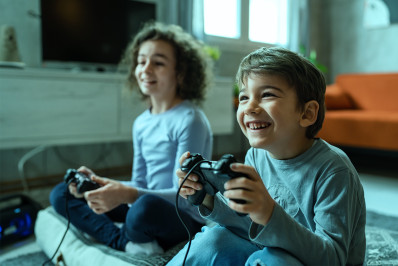
While video games got a bad rap among parents in the past, now they are often recognized as powerful tools for developing real-life skills. When approached responsibly, games can help children build essential skills like critical thinking, creativity, and teamwork, providing both fun and educational benefits as part of a balanced lifestyle.
The digital playground: Where kids grow and connect
With over 2.87 billion gamers worldwide in 2025, the gaming industry has become one of the most dynamic and rapidly growing sectors. Gaming has now evolved beyond a pastime into a powerful space where children can express themselves, create, and connect. Today’s games offer a platform for kids to craft digital identities, collaborate with peers across the globe, and explore endless creative possibilities. Whether through building virtual worlds or engaging in collaborative gameplay, children can gain new experiences that shape their real-world abilities.
As psychologist Jarmila Tomková says, “The game environment is a context in which a person may experience adventures and get to know themselves.”
FUN FACT
Although gaming has long been considered a predominantly male hobby, research shows the gender gap is smaller than many think. In fact, 53% of U.S. gamers are men, while 47% are women, making the gaming community nearly balanced.
Building social skills, teamwork, and leadership in virtual spaces
For children who struggle with social interactions, online games offer a welcoming environment to connect with others. This trend is further driven by advances in Virtual Reality (VR), which enhances these experiences and provides immersive spaces where social interactions feel authentic. Games like Rec Room allow kids to create their dream online persona, meet others, communicate, and collaborate in virtual worlds, mimicking real-life social settings.
Some games like Minecraft and Roblox allow children to create and shape their own worlds, fostering their creativity and encouraging teamwork in shared digital spaces. These platforms promote a sense of autonomy and cooperation as children design and navigate complex environments alone or together with their friends.
Cooperative games like It Takes Two or Fortnite take teamwork to the next level, challenging players to work together to solve puzzles and achieve shared goals in a high-energy setting. These games emphasize the importance of communication, collaboration, strategy, and mutual support, helping children develop skills they can use both in-game and in real-life situations, such as quick decision-making and leadership.
Bear in mind that popular games attract not only children but also cybercriminals. See how to protect your family.
Jarmila Tomková explains, “Even though the gaming environment is virtual, what a person experiences thanks to these stimuli is real, not virtual. This environment offers aspects of identity to be explored, lived, and accompanied by real emotions, which are included in a person’s self-concept and self-agency. This is a major benefit for all kids, especially those who are otherwise limited.”
Ensure your kids enter online gaming aware of potential dangers. Learn how cybercriminals target gamers and how to stay safe.
Critical thinking and decision-making in open-world games
Open-world games like The Legend of Zelda give players the freedom to explore vast, interactive environments, making them excellent tools for developing critical thinking and decision-making skills. Unlike linear games, where the path is predefined, open-world titles allow children to choose their own path, navigate complex landscapes, and make choices that shape the outcome of the story.
These games challenge not only problem-solving abilities but also visual-spatial skills as players explore intricate maps. Every decision can have lasting consequences, encouraging children to think critically about their actions and their impact on the game world. This type of gaming promotes an understanding of cause and effect, as the virtual world responds dynamically to the player’s choices.
The freedom to experiment and create in open-world games also helps children develop a strong sense of agency and ownership over their actions. Jarmila Tomková highlights: “Kids not only play and experience, but also explore the role of competent co-creator, offering a unique chance for a safe mode of training life skills applicable in day-to-day reality.”
Through these games, children can practice essential life skills like strategic planning, self-reflection, and decision-making in an immersive environment that mirrors the decision-making processes they will encounter in the real world.
While Minecraft encourages creativity, it can also open the door to cybercriminals. Learn how game modding can pose risks and how to stay safe.
Fostering creativity and adaptability through gameplay
Games that allow players to create and shape their own worlds provide an incredible opportunity for children to tap into their creativity and develop essential problem-solving skills. For example, Minecraft, with over 200 million monthly active players, offers an expansive virtual playground where kids can build everything from simple structures to entire universes, encouraging out-of-the-box thinking and fostering a sense of creative freedom. These environments give children the chance to experiment, adapt, and refine their ideas, all while navigating the challenges of creating something entirely from scratch.
In addition to Minecraft, popular commercial titles of different genres like Portal, Warcraft, or Borderlands also promote resourcefulness and adaptability. A study from Matthew Barr at the University of Glasgow found that games like these enhance children’s ability to adapt to new situations and collaborate effectively, improving communication and problem-solving skills. These games teach kids to think on their feet, troubleshoot challenges, and adjust their strategies – skills that extend beyond the screen and into real-life situations.
SCIENCE-BASED VIDEO GAME BENEFITS
Sharper thinking
A 2022 JAMA Network Open study of nearly 2,000 children found that those who played video games for three or more hours per day performed better on tests of impulse control and working memory than non-gamers. Brain scans also showed stronger activity in regions linked to attention and memory, suggesting that gaming may help sharpen certain cognitive skills.Boosting mental health
A 2021 review in JMIR Publications highlighted how commercial video games can help reduce symptoms of depression and anxiety. From casual titles like Candy Crush to social games like Minecraft, evidence shows games support emotional regulation, positive mood, and social connection. Importantly, they are accessible, low-cost, and stigma-free, making them a valuable complement or alternative to traditional therapy.Staying Connected A 2021 study published in Cyberpsychology, Behavior, and Social Networking highlighted how social video games became a vital meeting place for children and teens during the pandemic. Platforms like Roblox and Animal Crossing replaced malls and playgrounds, letting kids celebrate birthdays, hang out with friends, and even explore identity safely through avatars. Nearly 80% of teens said gaming with friends helps them feel more connected, showing that games can nurture empathy, cooperation, and belonging, especially when in-person play isn’t possible.
Understanding the risks: Balancing gaming with healthy habits
While video games can offer many benefits, excessive gaming can lead to frustration, mood swings, and even addiction since in-game rewards trigger dopamine release. Long gaming sessions can therefore impact a child’s emotional well-being and social development.
However, when played in moderation, video games can provide significant developmental benefits. Setting healthy limits on screen time and balancing gaming with physical activity and other hobbies can help children build skills like problem-solving, empathy, and creativity.
To ensure children enjoy the positive aspects of gaming without overindulging, parents can:
- Set boundaries on screen time (e.g., limit to 1–2 hours a day)
- Encourage physical activity outside of screen time
- Stay informed about the games children are playing (check their ratings and content)
- Encourage regular breaks to avoid overindulgence
Conclusion: Embracing the benefits of gaming
Whether it’s role-playing, action-adventure, or educational, video games can teach kids valuable skills like problem-solving, empathy, and creativity. By setting healthy boundaries, parents can help children balance gaming with other aspects of life, making gaming a positive and enriching part of childhood.
In today’s digital world, gaming can be a powerful tool for growth and learning when approached mindfully.