
As online scams and counterfeit listings continue to grow across e-commerce platforms, many shoppers are rightfully asking: Is Etsy safe to buy from? Can I trust Etsy sellers with my credit card? What if something goes wrong with my order?
In this deep-dive guide, we’ll examine the safety of Etsy from many angles, including common scams to watch out for. Whether you’re a first-time buyer or a seasoned Etsy shopper, this article will equip you with the knowledge and tools to shop confidently and securely.
Get to know Etsy
Etsy was founded in 2005 and since then it has grown into one of the world’s leading platforms for unique and handmade goods. By the end of 2024, there were around 95 million active buyers from all over the world, purchasing original items from approximately 8 million sellers.
What can you buy on Etsy? A better question might be: What can’t you buy? From original artwork and handcrafted jewelry to car accessories, clothing, outdoor supplies, and kids’ toys – the variety is endless. If it’s creative, custom-made and one-of-a-kind, you’ll likely find it on Etsy.
While the vast majority of sellers are genuine artisans and small business owners, scams do exist even on this platform just like on any major online marketplace. And even though they represent a small percentage of Etsy traffic, fraudulent listings or scam tactics can result in stolen money or personal information. That’s why being both informed and vigilant is essential when seeking to make a purchase.
Is Etsy a safe platform to use?
Like many popular online marketplaces, Etsy can be a target for scammers looking to exploit unsuspecting buyers.
Etsy platform admins take active steps to help ensure a safer shopping experience for everyone. There are several built-in features that help keep you safe:
Etsy’s buyer protection
Etsy offers a Purchase Protection Program designed to safeguard buyers when things don’t go as planned. For example, if your order never arrives, or if it shows up damaged or drastically different from the product listing, you can file a case within 100 days of the confirmed delivery date.
Once you initiate a claim, Etsy may request evidence such as photos of the item, screenshots of your communication with the seller, or some tracking information. The support team will review the case, and if the issue qualifies under their protection policy, Etsy will step in to mediate and ensure you receive a refund.
This support service is completely free, as long as your claim is made within the 100-day window. Refunds processed by Etsy must take place within 180 days of the date of the transaction.
Payment security
Every page and payment on the platform is protected by HTTPS encryption and TLS protocols, which shield your login credentials and financial information from interception during transmission.
When you make a purchase, Etsy Payments handles the process using trusted payment methods including credit cards, debit cards, and PayPal. These transactions are routed through vetted, secure gateways – not directly to individual sellers. This adds an extra layer of fraud prevention and ensures that your money stays protected until the order is successfully completed.
All credit/debit card information sent to Etsy is tokenized with payment processors, so Etsy stores no sensitive credit/debit card information.
By keeping all payments on-platform and encrypted, Etsy helps minimize the risk of unauthorized access, phishing, and other cyber threats.
Shopping while connected to public Wi-Fi? Boost your online security with a VPN to protect your data from prying eyes. With ESET HOME Security Ultimate, VPN protection is built-in alongside powerful features like Safe Banking & Browsing and the Browser Privacy & Security extension to keep you and your transactions safe and private.
Seller verification & reviews
Before a seller can begin listing products on Etsy, they must first verify their identity and provide a valid email address – a basic but important step in maintaining platform integrity.
Once their shop is live, Etsy equips buyers with helpful trust signals: you can view a seller’s star rating, written reviews, and average response times, all based on recent transactions. These details remain accessible for up to 100 days after purchase.
This transparency is meant to ensure that you’re not shopping blindly and can make decisions based on real customer experiences.
If you would like to read up more on Etsy’s seller policies, don’t hesitate to check the website.
Common Etsy red flags
Despite the built-in safety measures, scammers often exploit loopholes and attempt to bypass platform rules.
One frequent trick involves sellers attempting to lure buyers off the platform by offering supposedly better deals or discounts. These links can redirect you to malicious websites designed to steal your personal or financial information.
Another common threat are phishing scams, where scammers impersonate Etsy representatives through messages or emails. To make the scam more effective, they often create a false sense of urgency. For example, they claim your account is at risk in order to pressure you into revealing sensitive information like bank details, login credentials, or personal data.
Here are some of the most common red flags to keep on your radar when shopping on Etsy:
Off-platform payment requests
Although Etsy strictly prohibits off-platform payment methods, some scammers may try to lure you into paying via gift cards, cryptocurrency, or third-party apps. If a seller suggests any payment method outside of Etsy, do not proceed – report them immediately and avoid any transactions.
Counterfeit & trademark infringement
Some products on Etsy are knockoffs of major brands like Disney, NFL, or Louis Vuitton. These counterfeit items may appear authentic but are often made from cheap materials and are not covered by Etsy’s Purchase Protection Program. This highlights the golden rule of scams: If something seems too good to be true, it probably is.
In 2023, according to Etsy’s 2023 Transparency Report on trust & safety, the platform significantly strengthened its anti-counterfeiting efforts. As a result, Etsy removed 1.45 million listings for suspected counterfeit violations – an increase of 216% compared to 2022.
Phishing & suspicious messages
Scammers may impersonate Etsy staff and send urgent messages claiming your account is at risk unless you verify your personal details. These are classic phishing attempts. Etsy will never ask for sensitive information via message, so if you receive one, block the sender and avoid clicking on any links.
You can easily verify whether a message truly comes from Etsy. In the Messages section of your account, there’s a dedicated inbox labeled “From Etsy.” Any legitimate communication from Etsy will appear there. If you receive a message outside this folder, especially one asking for sensitive information, it’s almost certainly a scam.
Fake product pictures
If a product photo looks too polished or doesn’t match the style or quality of the seller’s other listings, it could be a red flag. In such cases, you can use a reverse image search to check whether the images have been copied from another website. Tools like Google’s “Search by Image” feature make it easy to detect stolen or misleading photos – and help you avoid falling for a scam.
Fake reviews and misleading listings
Reviews can help you spot reputable sellers – but they can also be manipulated. Be cautious of shops that have an unusually high number of short, vague reviews (like “Great seller!” or “Fast shipping!”). Genuine reviews tend to include specifics about the item, delivery, or customer experience.
Suspicious profile
If a seller’s profile is completely blank or filled with poor grammar and spelling mistakes, consider it a warning sign. A legitimate shop usually includes some background information, a logo or profile picture, and professionally written content. Also, observe how the seller interacts with buyers. Do they respond to comments or messages promptly and respectfully? Is their communication clear and consistent? If the answers raise doubts, it’s safer to move on and find a more reputable vendor.
Common Etsy scams to watch out for
Fake shops
The seller takes payment and then disappears – no product is shipped and communication stops entirely.Bait-and-switch
You order an item, but receive a cheaper, low-quality substitute that doesn’t match the listing.Fake address
The scammer ships the package to a different address in the same ZIP code to create false delivery proof. This way, they avoid issuing a refund while keeping both your money and the item.Varying price listings
Fraudulent sellers post the same product at different prices across platforms like Etsy, Amazon, or eBay. If you try to buy the cheaper version, they may claim it’s out of stock and push you toward a higher-priced listing elsewhere.
We’ve prepared a short checklist to help you shop more safely on Etsy. Run through these quick steps before making a purchase:
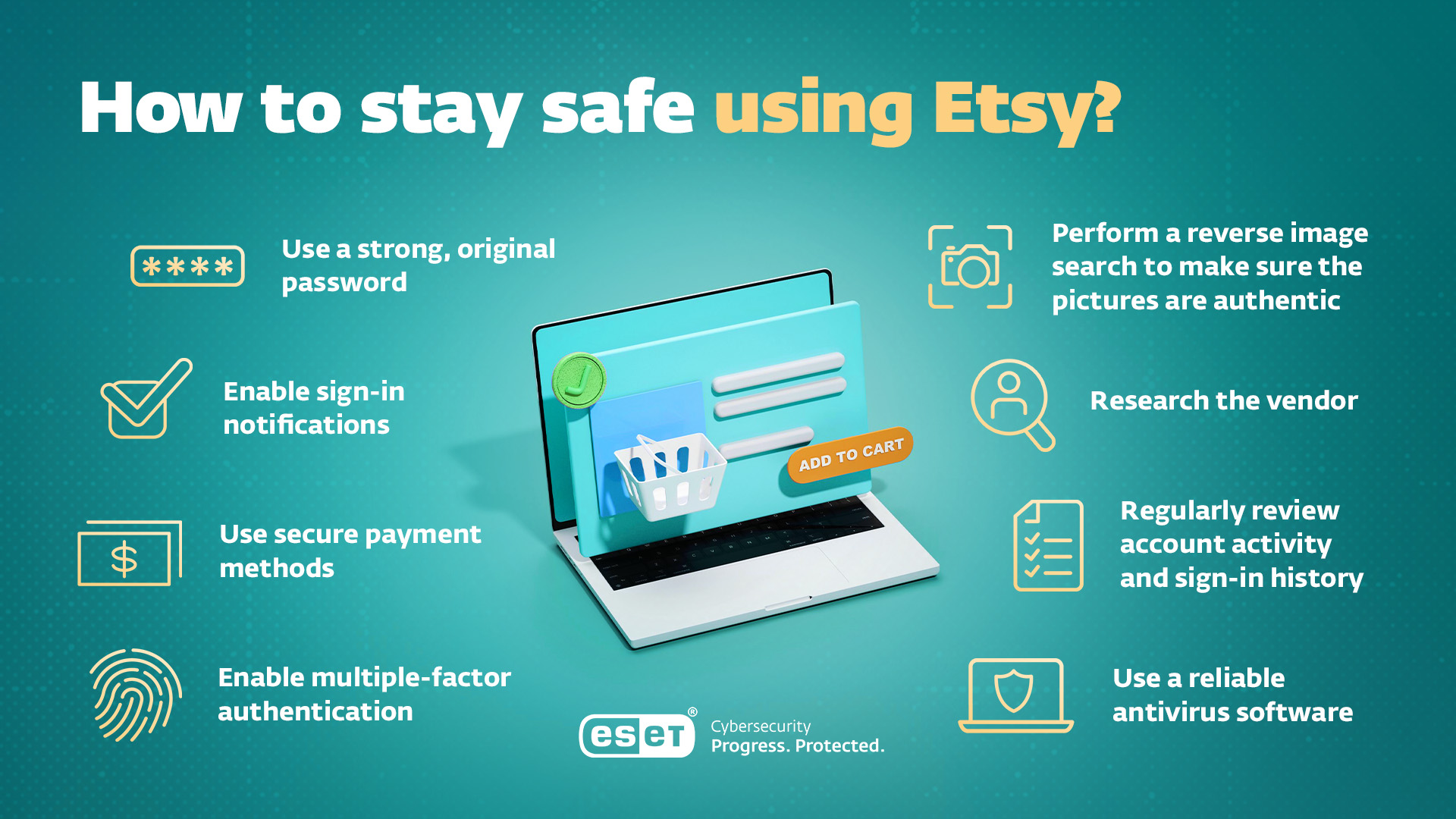
If you’re browsing Etsy on your Android device, consider using ESET Mobile Security for Android. It includes a built-in Anti-Phishing feature that helps block fraudulent websites and phishing scams before they can do any harm. Additionally, its Payment Protection feature adds an extra layer of security when you shop online, ensuring your payment details stay safe, even if you're using public Wi-Fi.
You’ve been scammed. What to do?
Even the most savvy shoppers can still fall victim to well-disguised scams. If it’s happened to you, don’t panic – take prompt action.
1. Report the scam to Etsy
- Use Etsy’s built-in reporting tools to alert the platform:
- Go to the product or seller page and click “Report this item” or “Report this member”
2. Open a purchase protection case
Etsy’s Purchase Protection Program covers various cases so always be sure to open one for a problem you are experiencing:
- Go to Your account → Purchases and reviews
- Find the affected order and click Help with Order
- Follow the prompts to submit a case
Be ready to upload supporting evidence such as order confirmations, photos, or seller messages.
3. Contact your payment provider
If you paid outside the platform, contact your bank or credit card provider right away. You may be able to initiate a chargeback to recover your funds. If you believe your personal information might have been stolen via a phishing attack, freeze your credit cards and watch any financial statements closely.
Expert tips and insights
“Online marketplaces like Etsy provide fertile ground for scammers due to their inherent characteristics. These platforms facilitate the exchange of money and goods through third-party delivery services and online payment systems, while buyers and sellers often interact using pseudonyms with minimal disclosure of their real identities. This level of anonymity creates an environment ripe for exploitation by cybercriminals who mimic the roles of all parties involved in transactions and even develop tools to automate their scams.
In our research, we uncovered and infiltrated malicious services used by dozens of criminal groups. These services offer training for affiliates and tools that enable the creation of fake listings, fraudulent payment gateways, and counterfeit parcel services, as well as facilitate communication through online chats, emails, and SMS messages.
While security solutions can help protect users by blocking malicious content, the best defense is awareness. Understanding the tactics used by attackers, steering clear of suspicious scenarios, and promptly reporting questionable activities to marketplaces and platforms are crucial steps to staying safe in the online marketplace ecosystem.”
- Ondrej Kubovič, Security Awareness Specialist
Final thoughts
Etsy remains a great option to discover unique, handmade goods. With millions of trustworthy sellers and built-in protections like Purchase Protection and secure payment systems, it’s clear that Etsy takes buyer safety seriously.
However, like any online marketplace, it’s not immune to scammers and fraudulent activity. That’s why it’s essential to stay informed, follow the red flag warnings, and stick to safe shopping practices.
To strengthen your cybersecurity, we strongly recommend using ESET HOME Security Ultimate for comprehensive protection on your devices, or ESET Mobile Security for Android if you're shopping from your phone or tablet. These solutions offer advanced features to help safeguard your personal data and online transactions.
Frequently asked questions
Can I trust all Etsy sellers?
Most sellers on Etsy are legitimate and genuinely focused on providing great products. That said, it’s always wise to check a shop’s history, read through reviews, and review their store policies before making a purchase.
How does Etsy’s Purchase Protection work?
If your item never arrives, or it arrives damaged or significantly different from its description, Etsy can mediate a refund through its Purchase Protection program. To qualify, you must report the issue within 100 days of the confirmed delivery date.
What payment methods are safest on Etsy?
Your safest option is to use Etsy Payments, which supports credit cards, debit cards, PayPal, and other secure methods. These payment channels include built-in buyer protections and keep your transaction within the safety of the Etsy platform.
Can I get a refund for counterfeit or misrepresented items?
Yes. If an item turns out to be counterfeit or not as described, you can file a claim under Etsy’s Purchase Protection program. Be sure to report the issue within 100 days and provide evidence, such as product photos and communication with the seller.