ESET APT Report
Q4 2025 – Q1 2026
A comprehensive overview of Global APT activity, uncovered through ESET telemetry and expert analysis from ESET’s leading threat researchers.
Q4 2025 – Q1 2026
A comprehensive overview of Global APT activity, uncovered through ESET telemetry and expert analysis from ESET’s leading threat researchers.
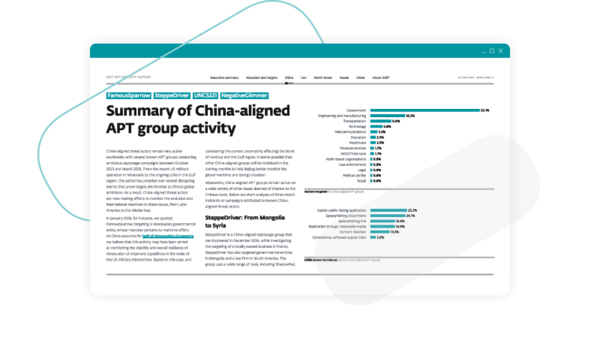
China-linked groups targeted Venezuela, Syria, Cambodia, Panama, Gulf states and South Korea, focusing on maritime monitoring, reconstruction interests, and strategic technologies - including AI and robotics - aligned with Beijing’s long-term economic and security priorities.
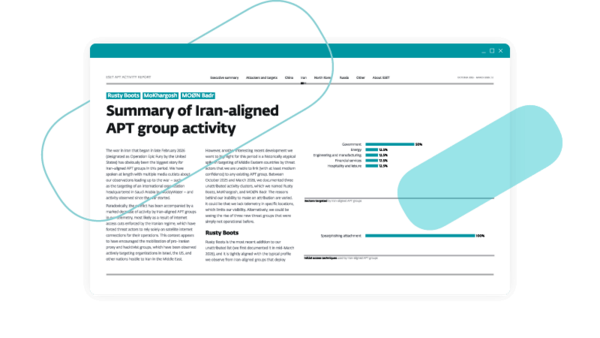
Amid Iran’s 2026 war, Iran-aligned APT activity declined due to internet limits, while proxies surged. ESET saw attacks on Israel, including wipers. In UAE defense company was compromised and Android spyware targeted Arabic-speaking users.
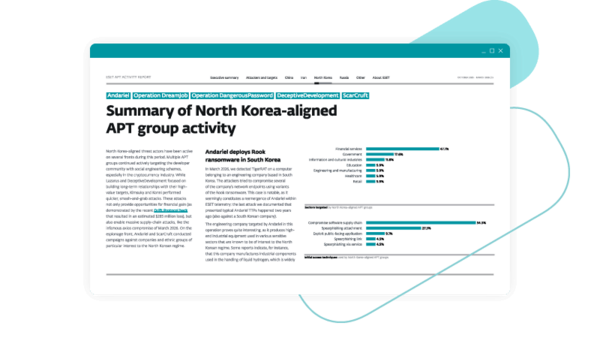
North Korea-aligned groups targeted developers and cryptocurrency through social engineering. ESET also saw an Andariel attack in South Korea, deploying TigerRAT and attempting to deploy ransomware against an engineering firm tied to hydrogen and nuclear sectors.
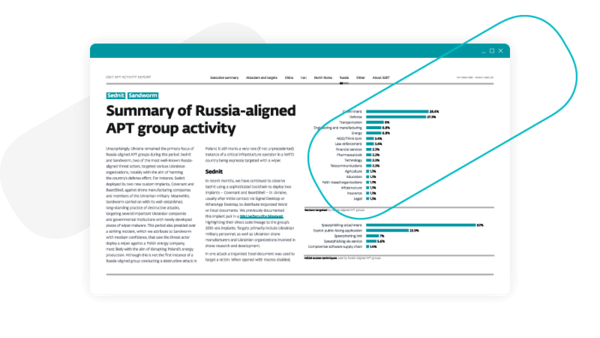
Russia-aligned actors focused on Ukraine again, with Sednit targeting military, drone, and logistics sectors, while Sandworm intensified destructive attacks, deploying new wipers and striking a Polish energy company. Activity also extended to regional support networks aiding Ukraine’s defense.
The ESET APT Activity Report provides an expert-led analysis of notable activities conducted by advanced persistent threat (APT) groups. It offers a snapshot of the global threat landscape, based on ESET telemetry and original research.
The report is published biannually, providing insights into APT activity and trends across two distinct six-month periods each year.
The report highlights APT campaigns and threat activity affecting regions around the globe, with a focus on key geopolitical hot spots. Coverage reflects where ESET researchers observed significant operations during the reporting period.
The findings are based on proprietary ESET telemetry, expert analysis, and real-world investigations conducted by ESET’s global network of threat researchers. Other sources used in the reports’ analyses may include honeypots and external security feeds as well as data from other cybersecurity vendors. All intelligence shared is carefully verified before publication.
ESET APT Activity Reports offer in-depth analyses of the global threat landscape, enriched with comments and recommendations by ESET’s diverse team of cybersecurity specialists – many of whom are frequent speakers at prestigious industry conferences, like RSA, Black Hat, and Virus Bulletin, and renowned for their expertise.
With ESET’s R&D centers spanning Europe, Asia, and North America, ESET’s analysts provide around-the-clock coverage, leveraging diverse time zones and locations to address the evolving threat landscape.
ESET APT Activity Reports provide an overview of activities of selected advanced persistent threat (APT) groups investigated and analyzed by ESET Research within the reporting period. APT groups are typically highly sophisticated threat actors, often backed by nation states, engaging in targeted cyberattacks and espionage. In contrast, the threat reports focus on widespread cyberthreats – so-called crimeware – that typically aren’t targeted in nature, and thus, can affect anyone.
The report focuses on documented campaigns by threat actors in key geopolitical hot spots around the globe. It includes espionage campaigns, financially motivated attacks, destructive operations, and exploitation of zero-day vulnerabilities.
Cybersecurity professionals, threat analysts, decision-makers in IT and security, and anyone interested in understanding the evolving tactics, techniques, and procedures (TTPs) of global threat actors.