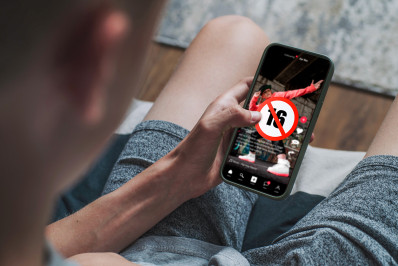
For many children and teenagers, social media is part of everyday life. It is a place to watch videos, follow trends, talk to friends, and explore their identity. But as the UK government plans to ban under-16s from major platforms such as TikTok, Instagram, Snapchat, YouTube, Facebook, and X from spring 2027, the debate is shifting. Can age bans really protect children from harmful content, grooming, cyberbullying, addictive design, and unwanted contact from strangers, or will they push young users toward less regulated spaces and create new privacy risks through stricter age verification?
Key points of this article:
- The UK plans to ban children under 16 from major social media platforms, with the rules expected to come into force in spring 2027.
- The proposal would affect platforms such as TikTok, Instagram, Snapchat, YouTube, Facebook, and X, while messaging apps such as WhatsApp and Signal are expected to be excluded.
- The government is also considering restrictions on livestreaming, communication with strangers, infinite scrolling, overnight use, and AI romantic companion chatbots.
- Critics warn that blanket bans may push children toward less regulated spaces or encourage them to bypass age checks using VPNs, false dates of birth, or borrowed accounts.
- For parents, the goal is not panic or total control, but helping children build privacy awareness, critical thinking, healthy digital habits, and the confidence to ask for help.
What exactly is the UK proposing?
The UK proposal would make social media platforms responsible for keeping under-16s off major services such as TikTok, Instagram, Snapchat, YouTube, Facebook, and X. Messaging apps such as WhatsApp and Signal are expected to be excluded, so children would not be cut off from basic communication with family, friends, or school communities. The plan also looks beyond account access. The government is considering stricter limits on features such as livestreaming, communication with strangers, infinite scrolling, overnight use, and AI chatbots designed to simulate romantic or intimate relationships.
In other words, the debate is not only about whether children should be allowed on social media, but also about which platform features are appropriate for young users.
Why are governments considering social media bans?
The UK is not the first country to consider strict age rules for social media. Australia has already introduced a minimum age of 16 for age-restricted social media platforms, requiring them to take reasonable steps to prevent under-16s from having accounts. The UK proposal follows the same broader debate: whether children can be better protected if platforms, not only parents, are made responsible for limiting access and risky features.
“Tech companies have had countless opportunities to keep children safe, yet they have failed to act. That is why we are taking power away from the tech giants and putting it back in parents’ hands,” UK Technology Secretary Liz Kendall said in the government’s press release.
The concern is not only what children see online, but also how social media platforms are built. In 2024, the American Psychological Association warned that some platform features and functions can create psychological risks for young users, especially when they encourage excessive use, social comparison, or unwanted contact. Features such as endless feeds, autoplay videos, notifications, likes, comments, and algorithmic recommendations can make platforms difficult to leave, especially for younger users.
For example, just 27% of children in the UK regularly play outside their homes, compared to 71% of the baby boomer generation, according to the 2022 survey conducted by Save the Children charity.
“It’s really striking to see this gradual decline in playing out over time,” Helen Dodd, Professor of Child Psychology at University of Exeter commented on the survey. “To have just 27% of children playing out today compared to 80% in the past represents a huge change to the nature of childhood experiences. It’s logical to expect this to have consequences for young people’s development. As a society, we’re perhaps not taking it seriously enough.”
Some consequences of this reduced level of playing out could affect friendship development, social skills, freedom, independence, and the negotiation of shared spaces, according to Mrs. Dodd.
“We are also concerned that these changes to children’s experiences could have an adverse effect on their mental health,” she added.
EXPERT PERSPECTIVE
Child psychologist and play therapist, Kamila Ryšánková, explains why social media can be particularly difficult for children to step away from:Children and adolescents may find it difficult to stop using social media because their brains are still developing, particularly the areas involved in impulse control, decision-making, reward processing, and emotional regulation. Social media platforms are also designed to capture and maintain users’ attention through a constant stream of new content, algorithms, social comparison, and instant rewards such as likes, reactions, and messages from others. As a result, children often need support from adults to set healthy boundaries and develop balanced habits. The role of parents is essential. In some cases, however, technology companies also bear responsibility, and government regulation may have a role to play, particularly when it comes to protecting children from features of digital platforms that can encourage excessive use and make healthy self-regulation more difficult.
Governments are also responding to risks that parents cannot always manage on their own, from cyberbullying and harmful content to grooming, scams, appearance pressure, and unwanted contact from strangers.
The argument behind stronger regulation is not that every child is harmed by social media, but that platforms should carry more responsibility for the environments they create. It means regulators are increasingly asking whether apps used by children should do more to limit risky features and protect younger users by default.
Experts also praise the possible cultural shift if the changes are implemented correctly. For example, a child not using social media will not be seen as “a weirdo” and their parents will not face such social pressure to allow it despite the age restrictions.
“A ban is likely to change public perceptions, and make social media use less acceptable in younger age groups. This is an important first step in public health education and behavioral change. It can also minimize instances of individual harms for young people who cease engaging with platforms, and over time it can, if done right, change our culture around social media use among certain age groups,” said Prof Amy Orben of MRC Cognition and Brain Sciences Unit at University of Cambridge.
“First and foremost, the ban is a recognition by government that previous policies to make social media safe have not worked as planned. Banning something for those most vulnerable is a good step if it cannot be made safe. But we know why social media is at times unsafe for not just children but adults as well: this includes harmful content, conduct or communications, as well as design features that make it harder for us to disengage even when we want to. We have failed to adequately address these,” Orben added.
What do we know about children’s digital habits?
In 2024, WHO Europe published findings from the Health Behavior in School-aged Children study, which surveyed almost 280,000 young people aged 11, 13, and 15 across 44 countries and regions in Europe, Central Asia, and Canada. The report found that problematic social media use among adolescents rose from 7% in 2018 to 11% in 2022.
More than 1 in 10 adolescents (11%) showed signs of problematic social media behavior, such as struggling to control their use or experiencing negative consequences in daily life. Girls reported higher levels than boys (13% vs 9%). The report also found that 36% of young people were in constant online contact with friends, with the highest rate among 15-year-old girls (44%). A third of adolescents (34%) played digital games every day, and 12% were considered at risk of problematic gaming, with boys more likely than girls to show signs of it (16% vs 7%).
Bans alone may not be enough
At first glance, banning social media for younger children may sound like a simple solution. If a platform exposes children to harmful content, strangers, or unhealthy design, keeping them away until they are older can seem like a logical step.
But children do not always respond to restrictions by going offline. Some may enter a false date of birth, use someone else’s account, borrow a friend’s device, or look for technical workarounds such as VPNs. Others may move to smaller platforms or online communities where safety tools, moderation, and parental awareness are weaker.
Child psychologist and play therapist, Kamila Ryšánková, shares her view:
A social media age ban alone is not a universal solution, even though there are strong arguments in its favour. Every child develops at their own pace, and factors such as the quality of the family environment, digital literacy, and whether parents set clear boundaries and talk openly with their children about the online world all play an important role. The most effective approach, therefore, combines sensible legislation designed to protect the most vulnerable children with parental responsibility. A ban alone, without education, communication, and active parental involvement, is unlikely to solve the problem in the long term.
Data from Australia, which adopted a similar ban in December 2025, shows that nearly 75 percent of Australia’s 14- to 15-year-olds were not complying, mostly because they perceived so few others were doing so.
This does not mean age limits are pointless. They can reduce exposure, make platforms more accountable, and send a clear message that children’s safety should not depend only on parents. But they work best as one layer of protection, not as a replacement for digital literacy, privacy awareness, and open conversations at home.
Bans are not the only way to manage children’s access to social media. Parental controls can also help, especially when they are introduced openly and explained clearly. Before setting them up, read more about how to talk to your child about parental controls.
What age checks mean for privacy
If children under 16 are not allowed to use certain platforms, those platforms need a more reliable way to check how old their users are. UK regulators Ofcom and the Information Commissioner’s Office note that self-declaration alone is not an effective way to determine a user’s age or prevent underage access. Stronger age checks may help platforms keep younger children away from spaces that are not meant for them.
But they also raise privacy questions, because all age assurance methods involve the processing of personal data. According to Ofcom and the ICO, these methods should be necessary, proportionate to the risks, and compliant with data protection law.
For parents, the takeaway is simple. Age checks may help keep children away from unsuitable spaces, but they should not come at the cost of unnecessary data collection.
Why children still need guidance
Social media is not only a source of risk. For many young people, it is also where they talk to friends, follow hobbies, learn new things, share jokes, and feel part of a group. A child who is interested in music, gaming, sport, art, or books may find communities online that they do not have around them offline.
That does not mean children need unlimited access. But if adults describe social media only as harmful, children may be less willing to talk about what they actually do online. A more useful starting point is curiosity: what do they enjoy watching, who do they follow, what makes them want to keep scrolling, and how do they feel afterward?
This helps parents understand whether social media is mainly creative, social, stressful, addictive, or upsetting for their child. And that is often more useful than simply knowing how many minutes they spend on an app.
Talk about workarounds before they become a secret
If age bans become more common, some children will hear about ways to get around them. For many of them, entering a false age or using someone else’s account may not feel like a serious safety issue. It may simply feel like a way to access the same apps as their friends.
That is why it is important to talk about workarounds before they become a secret. Explain that age rules are usually connected to real risks, such as adult content, contact from strangers, public sharing, or features younger users may not be ready to manage alone. You do not need to give children a technical lesson in how restrictions are bypassed. What your children should understand is that getting around one safety rule can sometimes create another risk.
TIP: Ask before you restrict
Before changing rules, ask your child what they use each app for, who they talk to there, and what they think would happen if they lost access. Their answers can help you set boundaries that feel clearer, fairer, and easier to follow.Kamila Ryšánková advises parents on how to respond when a child bypasses age restrictions:
If parents discover that their child has bypassed a restriction, for example by using a fake ID, entering a false date of birth, or using a VPN, the first step should be to understand why the child did it. Such behaviour is often not simply a sign of disobedience. It may be connected to a desire to fit in with peers, FOMO, or a feeling that they are being excluded from an important part of their social life. It is important to have a calm conversation in which parents set clear boundaries while also allowing the child to explain their reasons and feelings.
In practice, this means not starting the conversation with accusations or criticism, such as “How could you do this?” or “You broke the rules again,” but instead asking questions that create space for open communication: “Can you tell me what led you to do this?” or “What does social media give you that makes it so difficult to step away from it?” Parents should first listen and try to understand the situation, and then work together with their child to find solutions and establish new boundaries. An overly harsh reaction may lead children to hide their online activities even more.
What parents can do now
Whether or not a social media ban applies in your country, children still need guidance at home. Start by talking about online life regularly, not only when something goes wrong. Ask what apps your child uses, who they follow, what they enjoy watching, and whether anything online has ever made them uncomfortable.
It also helps to explain why age limits exist. Children often see them as random rules, but they are usually connected to real risks, such as contact with strangers, adult content, public sharing, or features designed to keep users online for longer.
Go through privacy settings together, especially on apps where your child can post, comment, receive messages, or be followed by people they do not know. Keep younger children’s accounts private where possible, limit who can contact them, and talk about what should never be shared publicly, such as school names, addresses, routines, phone numbers, or live locations.
Finally, set simple rules around sleep and screen-free time. Phones outside the bedroom at night, no devices during meals, or a calm hour before sleep can make a real difference. These rules work best when they are shared by the whole family, not only imposed on children.
Our Family Agreement can help you with that.
Final thoughts
The UK’s proposed social media ban shows that children’s online safety is no longer being treated as a private family issue only. Platforms and regulators have a role to play, especially when young users are exposed to harmful content, unwanted contact, or features that encourage excessive use.
But children also need guidance that no law can provide on its own. They need to understand how online spaces work, why privacy matters, and when to ask for help. For parents, the most useful approach is steady involvement such as clear boundaries, regular conversations, and enough trust that children feel able to speak up when something online does not feel right.
Frequently Asked Questions
Is the UK really banning social media for children under 16?
The UK government has announced plans to ban children under 16 from major social media platforms, with the rules expected to come into force in spring 2027. The details may still change as the proposal moves through the legislative process.
Which platforms would be affected?
The proposal is expected to apply to major platforms such as TikTok, Instagram, Snapchat, YouTube, Facebook, and X. Messaging apps such as WhatsApp and Signal are expected to be excluded.
Why does the UK want to introduce this ban?
The proposal is part of a wider effort to reduce children’s exposure to harmful content, grooming, cyberbullying, unwanted contact from strangers, and platform features that can encourage excessive use.
Can children get around age bans?
Some may try. Children can enter a false date of birth, use someone else’s account, borrow a friend’s device, or look for tools such as VPNs. This is one reason why bans should not be seen as the only solution. However, the UK government is studying the data from Australia, which has introduced a similar ban in December 2025, to create more effective age assurance measures.
Are age checks a privacy risk?
They can be, depending on how they are designed. Stronger age checks may require users to share more personal information, such as an ID document, a face scan, or verification through another service. Any system used to protect children should also protect users’ privacy and collect only what is necessary.
Should parents ban social media at home too?
Not always. Some children may need strict limits, especially if social media affects their sleep, mood, confidence, schoolwork, or offline friendships. But in many families, open conversations, privacy settings, clear rules, and gradual guidance work better than sudden bans.
What is the best way to protect children online?
No single rule, app, or parental control can remove every risk. A safer approach combines age-appropriate boundaries, privacy settings, healthy screen habits, and regular conversations about what children see and do online. The most important thing is that your child knows they can ask for help without fear of blame.