ESET SMB Cyber Readiness Index 2026
SMB‑focused insights from cybersecurity decision‑makers on risk, resilience, AI threats, and investment trends.
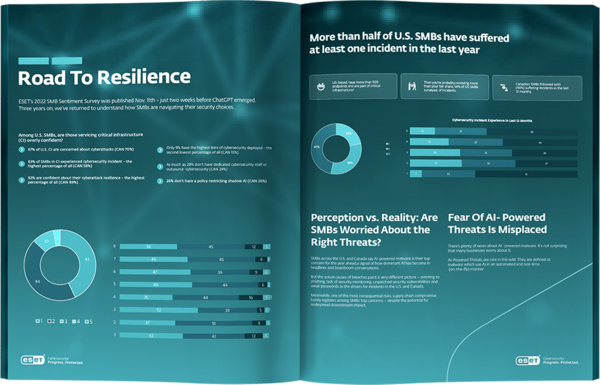
SMB‑focused insights from cybersecurity decision‑makers on risk, resilience, AI threats, and investment trends.
This report includes insights from 500 SMB organizations in the United States, collected in February 2026, as part of a broader survey of 4,400 respondents across 13 countries. Participants represent CISOs, IT security, and IT operations leaders from organizations with 25 to 1,000 endpoints. Explore how American companies responded.
64% of organizations are concerned about a cyberattack in the next 12 months, more concerned are those which had an incident or are part of critical infrastructure
Cybersecurity posture: 44% of organizations operate at an Advanced Protection level, combining endpoint protection, enforced secure access to critical applications, centralized security management tools, and regular operating system and software updates.
49% of companies expect a higher cybersecurity budget next year, as increasing threats and regulatory pressure push organizations to invest more in protection, resilience, and risk management.
SMBs don’t just exist — they power the economy. In Europe and North America, 99% of all businesses are small and medium-sized companies.

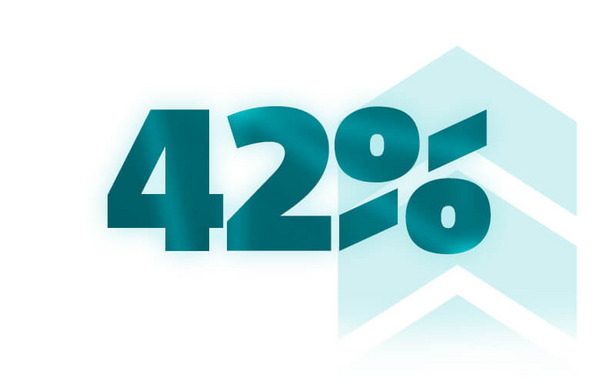
Priorities in cybersecurity investment and resources are clear: top investments include employee training and awareness at 42%.
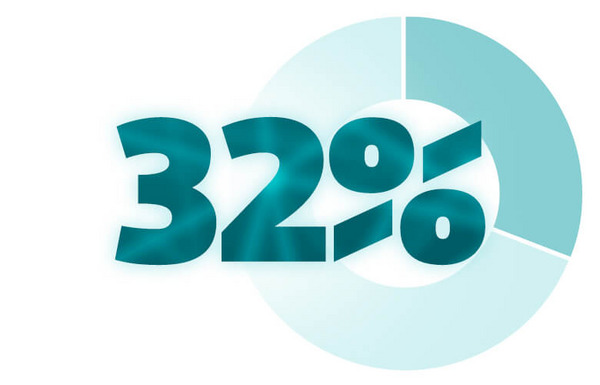
AI‑powered malware is seen as the top cyber threat for the next 12 months by 32% of organizations. As attackers leverage AI to automate and enhance attacks, organizations expect greater complexity, higher impact, and increased pressure on existing security defenses.

According to the survey, 69% of organizations have already implemented policies to limit unapproved or shadow AI usage. This highlights an accelerating shift toward formal AI governance as organizations seek to mitigate emerging security and compliance risks.
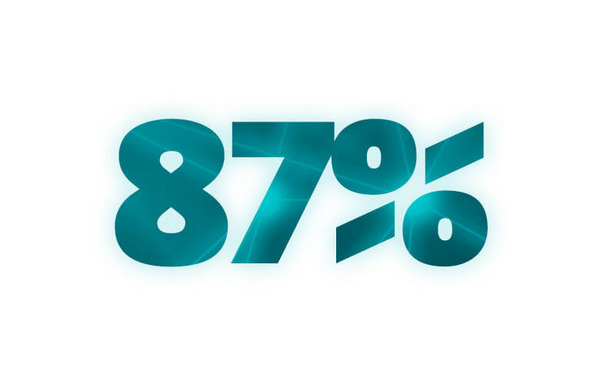
Cyber resilience confidence is high in the U.S., with 87% of organizations expressing confidence in their ability to withstand cyber incidents. This reflects strong security foundations, growing maturity, and a proactive approach to managing cyber risks.
This study surveys 4,400 organizations across 13 countries (U.S., Canada, U.K., Germany, Italy, Japan, Slovakia, Czech Republic, France, Spain, Netherlands, Denmark, Sweden) and captures front-line insights from CIOs, CISOs, IT Managers, Security Managers, Security Engineers/Analysts, IT Admins, and General Managers. It connects AI adoption, shadow AI policies, incident experience, training practices, MDR usage, and budget outlook into one cohesive picture for SMBs.
Yes. We analyze AI integration rates, perceived AI-driven risks, and whether organizations enforce an AI usage policy to control shadow AI (unapproved tools). You’ll see how policy presence correlates with incident rates and how AI is reshaping security priorities for SMBs.
Our findings underscore training as a first-line defense: organizations with more frequent, higher-quality training tend to report fewer incidents and faster recovery. The report details training frequency, program maturity, and how awareness changes security outcomes and confidence in resilience.
Managed Detection & Response (MDR) combines 24/7 monitoring, threat hunting, and guided response. Despite rising threat complexity and overworked IT teams, SMB adoption and awareness of MDR remain lower than expected. The report explains where MDR fits vs. MSP/MSSP support and when outsourcing improves time-to-detect and time-to-recover.
Yes — nearly half of organizations expect to increase their security budget next year. We break down where spend is going (e.g., XDR/SIEM, identity & access, cloud security, backup & recovery, training, vulnerability management) and how incident experience often triggers investment shifts.
SMB leaders and practitioners who need data-driven benchmarks: CIOs, CISOs, IT and Security Managers, Security Analysts/Engineers, IT Admins, as well as executives prioritizing AI governance, incident reduction, MDR evaluation, training ROI, and 2026 budgeting across multi-country operations.